
Introduction
The architecture of network security has undergone a fundamental, irreversible transformation. When developers ask what is zero trust, the answer usually starts with a critique of the past. For decades, the Virtual Private Network (VPN) stood as the undisputed standard for secure remote access, serving as the heavily guarded digital gateway to corporate infrastructure. However, the proliferation of distributed cloud environments, the exponential rise of sophisticated automated threat actors, and the increasing operational velocity required by independent developers and small engineering teams have rendered the traditional VPN architecture not only antiquated but actively detrimental to systemic security. The modern internet is an inherently hostile environment where automated bots account for more than half of all traffic, and newly exposed infrastructure is scanned, indexed, and targeted for exploitation within minutes.
This means that achieving reliable zero trust networking and ensuring comprehensive remote access security is more critical than ever. In this landscape, relying on perimeter-based defense mechanisms is akin to fortifying the outer walls of a structure while leaving the interior entirely unguarded. The strategic pivot toward zero trust architecture and specifically zero trust access solutions is no longer an enterprise-exclusive luxury, it is a fundamental prerequisite for projects of any scale.
This report provides an exhaustive, technical analysis of why traditional VPNs fail modern engineering teams, explores the mechanics of identity-based security, and delivers a comparative deep dive into the zero trust tools, specifically Cloudflare Tunnels and Tailscale, that make modern zero trust infrastructure accessible, highly performant, and cost-effective for indie projects and small teams.
1. The "Castle and Moat" Fallacy: The Architectural Failure of the VPN
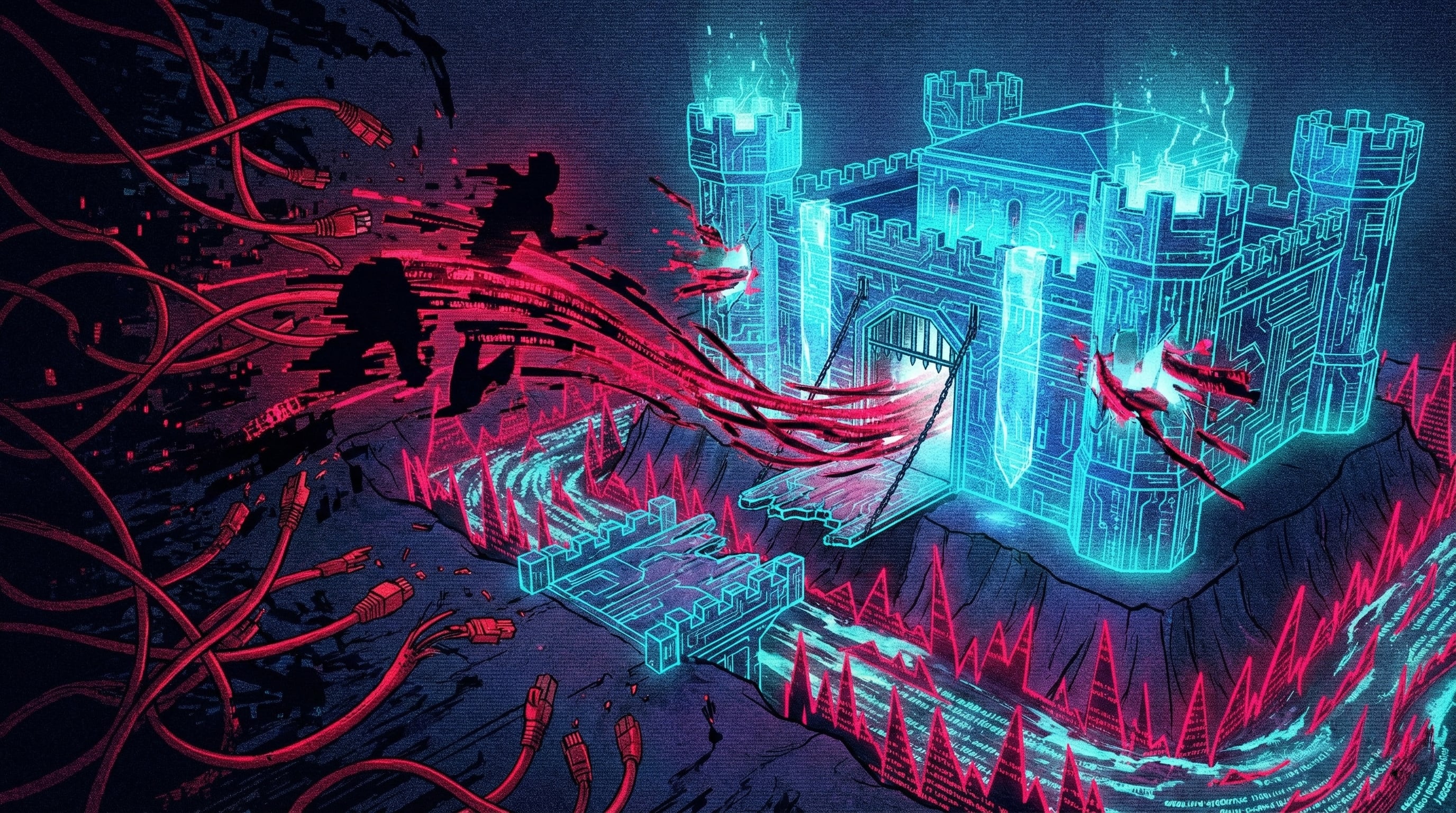
The traditional VPN relies on a security paradigm colloquially known as the "Castle and Moat" model. In this architecture, the network perimeter (the moat) is heavily defended by firewalls, intrusion detection systems, and VPN gateways. The core vulnerability of this model lies in its binary approach to trust: entities outside the perimeter are inherently untrusted, while any entity that successfully authenticates and bypasses the perimeter is granted implicit, broad trust.
For small engineering teams and independent developers looking for secure tunneling, this model introduces catastrophic risks, primarily driven by three converging factors: the facilitation of lateral movement, the automation of credential stuffing, and extreme architectural complexity.
The Threat of Lateral Movement and Implicit Trust
When a VPN gateway authenticates a user, it typically establishes an encrypted IPsec or OpenVPN tunnel that bridges the remote device directly to the internal local area network (LAN). Because the system assumes that internal traffic is inherently safe, it often applies minimal restrictions on what the authenticated user or the device they are operating can access. If an attacker compromises a single set of VPN credentials or exploits a zero-day vulnerability on the remote worker's endpoint device, the VPN tunnel becomes a high-speed, encrypted conduit for malicious actors to bypass all external enterprise defenses.
Once inside the network, attackers utilize this implicit trust to engage in lateral movement. Without internal network isolation and micro-segmentation (a control rarely implemented effectively by small teams due to its complexity and operational friction) the attacker can freely scan internal subnets, access sensitive databases, interface with internal administration panels, and pivot via Secure Shell (SSH) or Remote Desktop Protocol (RDP) to compromise adjacent servers. The VPN, originally deployed as a primary security mechanism, effectively becomes the distribution mechanism for network-wide compromise, turning a localized breach into a systemic, extinction-level event for the infrastructure. Furthermore, as companies stretch the capacity of legacy VPNs to accommodate hybrid work, users frequently experience performance degradation and disconnect from the VPN to maintain productivity, paradoxically jeopardizing the very security the VPN was meant to enforce.
Credential Stuffing and the Automation of Compromise
The reliance on static credentials to breach the "moat" makes VPN gateways highly susceptible to credential stuffing. Credential stuffing is a systematic, highly automated attack vector wherein threat actors deploy massive databases of compromised username and password pairs, procured from unrelated data breaches against the authentication endpoints of target networks.
The threat landscape of recent years has seen an exponential surge in these attacks, fueled by the commercialization of Bots-as-a-Service (BaaS) and the integration of Generative AI into attack workflows. Malicious automation now drives billions of unauthorized login attempts daily. Security researchers estimate that over 2,200 cyberattacks occur each day worldwide, equating to roughly one attack every 39 seconds. Microsoft alone intercepts tens of millions of identity-based attacks every 24 hours, with password attacks occurring at a staggering rate of 579 per second. In December 2024 alone, the industry witnessed approximately 330,000 successful account takeover (ATO) incidents driven primarily by credential stuffing, up significantly from the previous year due to a flood of newly breached data entering the dark web markets.
Small teams frequently rely on single-factor authentication for VPN access or utilize rudimentary Multi-Factor Authentication (MFA) that is vulnerable to prompt bombing and session hijacking. Because credential stuffing is highly scalable and executed via decentralized proxy networks designed to evade traditional IP rate-limiting and Web Application Firewalls (WAF), a brute-force or stuffed entry into a VPN gateway is statistically inevitable if the gateway is exposed to the public internet. While advanced defense mechanisms can achieve in-app blocking rates of over 99% for attacks, the sheer mathematical volume of millions of attempts guarantees that relying on a public-facing authentication portal is a losing battle.
The Burden of Architectural Complexity and the Trombone Effect
VPN architectures were designed for an era of monolithic, centralized networks. Adapting them to modern, distributed, cloud-native deployments requires maintaining complex Access Control Lists (ACLs), managing cryptographic keys, configuring hub-and-spoke routing models, and constantly patching gateway vulnerabilities.
For an independent developer or a solo DevOps engineer, the cognitive load and operational overhead required to secure a traditional VPN detract significantly from core development tasks. The complexity of segmenting VPN traffic means that, in practice, it is rarely done. Small teams often leave internal traffic unsegmented simply to ensure that critical services remain reachable.
Moreover, traditional VPNs introduce severe performance penalties known as the "trombone effect." Because all remote traffic must be backhauled through the headquarters central VPN gateway before reaching its final cloud destination, latency increases exponentially, and available bandwidth is choked by the gateway's hardware limitations. ZTNA natively solves this by connecting users directly to applications via cloud Points of Presence (PoPs), completely bypassing centralized chokepoints.
2. Zero Trust Concept "For Five-Year-Olds": Redefining the Perimeter
To mitigate the inherent flaws of the Castle and Moat architecture, the cybersecurity industry has widely adopted the zero trust framework. At its core, the central tenant of zero trust principles operates on a singular, uncompromising rule: "Never trust, always verify". Under this paradigm of a software defined perimeter, no user, device, or application is granted implicit trust, regardless of whether they are situated inside or outside the corporate network. It is the ultimate form of perimeterless security.
The Hotel Analogy: Perimeter vs. Identity
To understand the fundamental difference between perimeter-based security and Zero Trust, consider the analogy of a high-security research facility versus a modern, highly compartmentalized laboratory hotel.
In the perimeter-based (VPN) model, the facility is surrounded by a massive concrete wall and guarded by a single security checkpoint at the front gate. To enter, an individual must present a specialized ID card. The guard verifies the ID, opens the gate, and the individual walks inside. However, once inside the walls, there are no further checks. The individual can wander into the server room, access the financial archives, or enter the executive suites without anyone asking for identification again. If an imposter steals a valid ID card and passes the front gate, the entire facility is compromised because the interior relies on implicit trust.
Conversely, the Zero Trust model eliminates the massive outer wall entirely. Instead, the facility is designed so that every single room, cabinet, and workstation has its own dedicated, intelligent lock. When an individual attempts to open the door to the server room, the system does not care that they are already "inside" the building. The lock demands continuous verification: It checks the individual's identity, assesses the health and security posture of the device they are carrying, evaluates the time of day, and determines if their specific role requires access to that exact room at that exact moment.
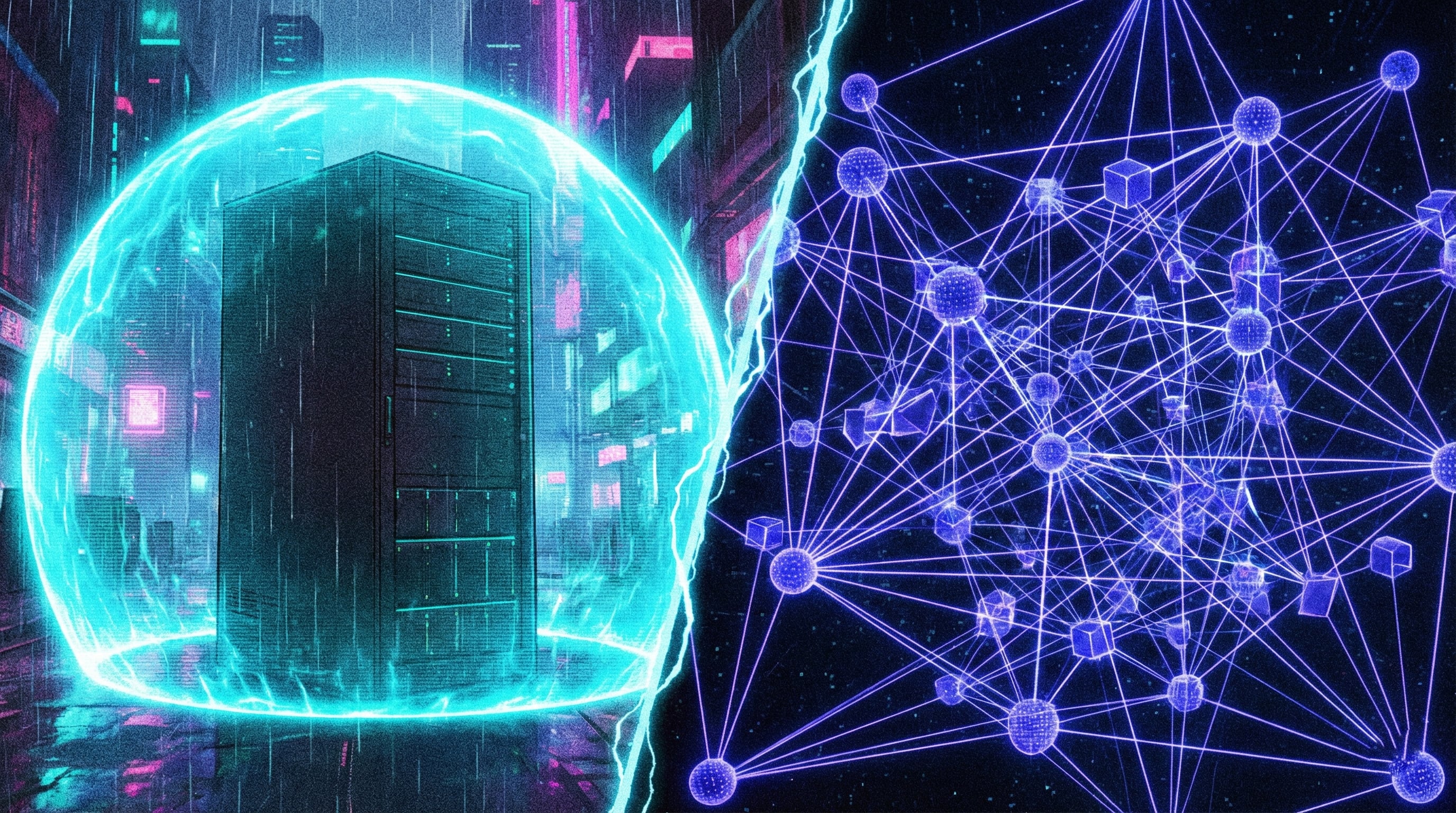
In a digital context, Zero Trust shifts the security perimeter away from the network edge and directly onto the application and the identity of the user via identity based security. Access is evaluated on a per-session, per-application basis, utilizing continuous authentication and granting only the principle of least privilege. If a threat actor compromises a user's credentials, they do not gain access to a broad network; they only gain access to the specific micro-segmented applications authorized for that user, drastically reducing the blast radius of a potential breach.
This identity-centric methodology relies heavily on the "Kipling Method" of access control, which programmatically answers: Who should access the resource? What application is used? When do they access it? Where is it located? Why is the data accessed? and How should access be allowed? By answering these questions for every single network packet, Zero Trust effectively renders the concept of a "trusted internal network" obsolete.
3. The "Open Port" Risk Analysis: The Speed of Malicious Discovery
A common anti-pattern in small-scale engineering is the reliance on "security through obscurity" — the assumption that deploying a service on a non-standard port without DNS routing will shield it from discovery. Modern threat intelligence unequivocally disproves this theory. The port forwarding risks associated with exposing an open port to the public internet are no longer a localized risk, they are an immediate, mathematically guaranteed vulnerability. Proper network cloaking is essential.
The Aggression of the Automated Internet
The internet is continuously mapped by both legitimate cybersecurity researchers and malicious botnets. Services like Shodan and Censys maintain exhaustive databases of every internet-facing device and its open ports. Shodan's enterprise capabilities allow users to force on-demand crawls of specific IP ranges, indexing newly exposed services instantly via simple API calls. Research indicates that a standard virtual machine with only common ports (like 80 and 443) exposed will receive dozens of banner grabs and deep scans from these engines every month, with Censys averaging 97 open port scans per virtual machine.
However, the threat from malicious, decentralized botnets is significantly more aggressive. Controlled honeypot experiments have demonstrated the terrifying speed at which the internet discovers open ports. In one empirical study, a Cowrie SSH honeypot was deployed on an Amazon EC2 instance with a mocked SSH service directly reachable on port 2222. Because there were no DNS records pointing to this server, it could only be found by bots systematically scanning global IP ranges. The results were definitive: the first connection attempt arrived within mere hours, and over a five-day period, the server sustained over 3,600 connection attempts originating from 37 different global IP addresses.
The 15-Minute Vulnerability Window
The operational velocity of threat actors has accelerated rapidly due to AI-assisted workflows. Threat intelligence metrics indicate that the window between the public disclosure of a Common Vulnerabilities and Exposures (CVE) identifier and active internet-wide scanning for that vulnerability has collapsed. Attackers currently deploy automated scripts to scan for newly discovered vulnerabilities within 15 minutes of an advisory being published. Exploitation attempts frequently begin before enterprise security teams have even finished reading the vulnerability documentation.
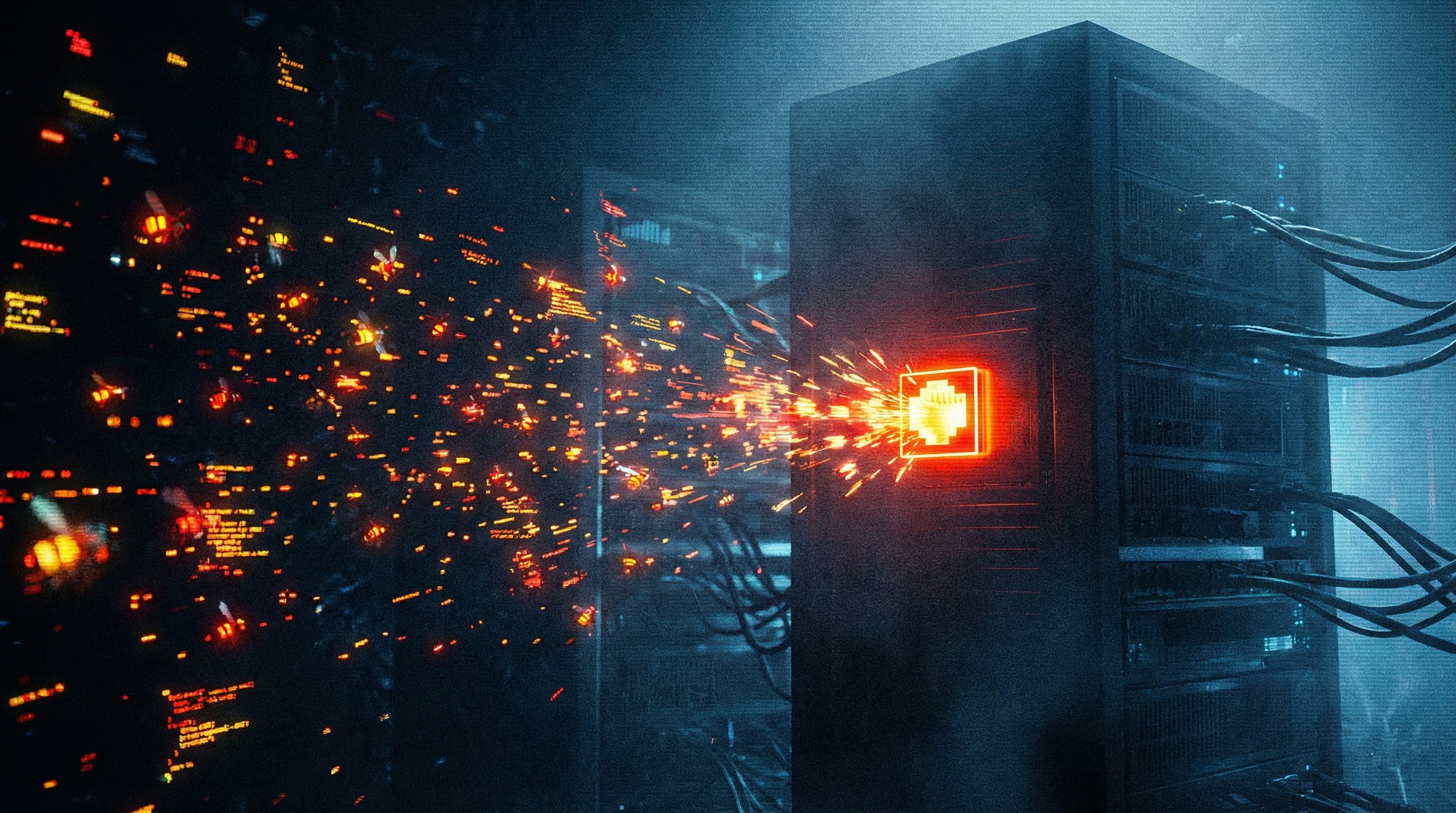
To illustrate the diversity of automated attacks targeting open ports, consider the data from a large-scale university honeypot study that captured over 763,000 malware infection attempts. The scanning is not merely looking for open doors; it is actively attempting to deploy specific, weaponized payloads.
| VirusTotal Malware Classification | Attempted Infection Count | Threat Category |
|---|---|---|
| Mal/Conficker-A | 366,607 | Worm |
| W32/Confick-O | 204,003 | Worm |
| Troj/Agent-UOB | 191,786 | Trojan |
| W32/Confick-C | 882 | Worm |
| Troj/DLoad-IK | 53 | Downloader |
| Mal/Spy-Y | 51 | Spyware |
This data proves that any open inbound port is a beacon for continuous, high-volume automated assault. ZTNA architectures inherently solve this by eliminating inbound open ports entirely, operating exclusively via outbound-only connections or encrypted mesh overlays.
4. Tool Deep Dive: Navigating Modern Access Solutions
For independent developers and small teams seeking robust server remote access, the theoretical benefits of Zero Trust must translate into tangible, easy-to-deploy solutions. Two dominant platforms have emerged that democratize these systems: Cloudflare Tunnel (formerly Cloudflare Argo Tunnel) and Tailscale. While both achieve the goal of securely connecting users to resources without traditional VPNs and granting secure server access, their underlying architectures and optimal use cases differ significantly.
Cloudflare Tunnel: The Reverse Proxy Powerhouse
Cloudflare Tunnel fundamentally reimagines application exposure by severing the requirement for inbound network connections to achieve secure private access. In a traditional deployment, an application requires a public IP address, an open port on a firewall, and potentially complex Network Address Translation (NAT) rules. Cloudflare Tunnel eliminates all of these prerequisites.
The architecture relies on a lightweight daemon, cloudflared, installed on the origin server. Instead of listening for incoming requests, cloudflared establishes persistent, outbound-only connections (typically utilizing HTTP/2 or QUIC) to the nearest Cloudflare global edge data center. When a user attempts to access the application via a configured domain name, the request hits the Cloudflare edge, is authenticated via Cloudflare Access, and is then routed backward through the established outbound tunnel to the local server.
Technical Insights for Cloudflare Tunnel:
- Total NAT Traversal: Because the connection is purely outbound, it bypasses Carrier-Grade NAT (CGNAT), restrictive corporate firewalls, and dynamic IP limitations effortlessly. A server running in a residential basement behaves identically to a server in an AWS Virtual Private Cloud.
- Inherent Volumetric Protection: By routing traffic through Cloudflare's massive global network (spanning 330 data centers), the origin server is entirely shielded from the public internet. The infrastructure inherits industry-leading DDoS mitigation, capable of absorbing attacks exceeding 100 Terabits per second, long before malicious traffic can reach the host CPU.
- Public-Facing Viability: Cloudflare Tunnel is uniquely suited for securely exposing web applications to public or semi-public audiences. Administrators can map internal services directly to public subdomains while enforcing granular access policies (e.g., country blocking, specific identity provider authentication) without needing to install client software on the end-user's device.
Tailscale: The Mesh Network Revolution
While Cloudflare operates as an intelligent centralized reverse proxy, Tailscale acting via a Tailscale mesh is a zero-config, peer-to-peer mesh VPN built on top of the modern WireGuard protocol. Rather than routing all traffic through a centralized gateway or edge network, Tailscale allows devices to communicate directly with one another, creating an encrypted overlay network.
Tailscale utilizes a centralized coordination server (the control plane) solely to manage public keys, handle authentication via external Identity Providers (IdPs), and distribute network topology information. However, the actual data transmission (the data plane) occurs directly between the communicating devices, enabling true private network access.
Technical Insights for Tailscale:
- Peer-to-Peer Encryption: Traffic is end-to-end encrypted using WireGuard's modern cryptographic primitives. Because data flows directly between nodes, the bandwidth and throughput are constrained only by the physical network connections of the end devices, avoiding the bottlenecks of centralized proxies.
- Sophisticated Hole Punching: Tailscale excels at establishing direct NAT traversal connections even when devices are located behind complex firewalls or CGNAT. It utilizes STUN/TURN protocols and UDP hole punching to negotiate direct paths. If a direct peer-to-peer connection is absolutely impossible, it seamlessly falls back to using globally distributed encrypted relays known as DERP servers.
- MagicDNS and Subnet Routing: Tailscale automatically registers human-readable DNS names for all devices on the mesh (MagicDNS), allowing developers to access internal servers via simple hostnames regardless of their physical location. Furthermore, a single node can be configured as a subnet router, securely exposing legacy, non-Tailscale-capable LAN devices to the mesh network without altering their configurations.
Architectural Comparison: Cloudflare Tunnel vs Tailscale
To assist engineering teams in technology selection, the following table synthesizes the architectural, security, and performance differentials between Traditional VPNs, Cloudflare Tunnel, and Tailscale.
| Feature / Metric | Traditional VPN (IPsec) | Cloudflare Tunnel | Tailscale (WireGuard) |
|---|---|---|---|
| Network Architecture | Hub-and-Spoke | Reverse Proxy | Peer-to-Peer Mesh |
| Attack Surface | High (Exposed ports) | Zero (Outbound only) | Zero (Stealth ports) |
| NAT Traversal | Poor | Excellent | Excellent |
| Client Requirement | Heavy VPN Client | Clientless for Web Apps | Client required on all nodes |
| Primary Use Case | Legacy enterprise compliance | Exposing web apps, APIs securely | Server-to-server, pure private networks |
5. Identity as the New Perimeter: Replacing Firewall Rules
The true operational power of Zero Trust lies in the principle of Identity as the New Perimeter. By abstracting access controls away from brittle IP addresses, static subnets, and MAC addresses, teams can integrate robust Identity Providers (IdPs) directly into their network flow.
In a Cloudflare Zero Trust deployment, the integration of OAuth and SAML providers acts as an impenetrable gateway. An independent developer hosting an internal metrics dashboard (e.g., Grafana) or a media server can configure a Cloudflare Access policy that explicitly denies all traffic unless the user successfully authenticates against a trusted IdP, such as GitHub or Google. This essentially builds identity-driven security at the edge.
Setting this up requires virtually no coding and completely replaces the need for complex internal firewall rule management. In the Cloudflare dashboard, access to a staging environment can be restricted strictly to members of a specific GitHub Organization or users holding an email address ending in a specific corporate domain. Because this authentication occurs at Cloudflare's edge network, unauthorized requests, automated bot scans, and unauthenticated traffic are dropped at the edge, never reaching the origin server, consuming zero local compute resources, and generating zero local log noise.
Tailscale implements a similar identity-driven philosophy. Nodes joining the mesh must authenticate via an IdP (Google, Microsoft, GitHub, etc.), and access rights between nodes are governed by central Access Control Lists (ACLs) written in JSON. A user is defined simply by their email address, and their devices inherit the permissions assigned to their identity.
6. Latency & Performance: Real-World Benchmarks
A critical concern when adopting overlay networks or reverse proxies is the potential degradation of network performance. In traditional hub-and-spoke VPNs, the "trombone effect" introduces severe latency penalties. ZTNA solutions approach this constraint differently, yielding varied performance profiles based on their routing architectures.
| Routing Solution | Latency Overhead | Throughput Capacity | Architectural Note |
|---|---|---|---|
| Raw Nginx (Direct) | 2 - 8 ms | 10 - 40 Gbps | Hardware-bound, no edge protection |
| Tailscale SSH (Direct) | 1 - 3 ms | Network-bound | Lowest latency, direct peer-to-peer |
| Cloudflare Tunnel | 15 - 50 ms | 1 - 10 Gbps | Edge proxy routing, rate-limited by plan |
| Tailscale Funnel/DERP | 10 - 80 ms | 100 Mbps - 1 Gbps | Relay-bound if NAT hole punching fails |
- The Mesh Advantage (Tailscale): Because Tailscale establishes direct peer-to-peer connections, it offers the highest performance profile for private network communications. The cryptographic overhead of WireGuard is exceptionally light, adding merely 1 to 3 milliseconds of latency overhead.
- The Edge Optimization (Cloudflare): Traffic routed via Cloudflare introduces different performance dynamics. Because requests must travel to the nearest Cloudflare edge node, physics dictates a baseline increase in latency (typically 15 to 50 ms). However, this proxy-based architecture uniquely benefits geographically distributed teams via Smart Routing, analyzing internet congestion and routing traffic over the fastest, least-congested paths.
7. Cost-Efficiency: Evaluating Free Tiers for Small Teams
For indie projects, solo developers, and teams with fewer than five members, procurement budgets are often non-existent. Traditional enterprise VPNs carry steep licensing costs per seat. In contrast, both Cloudflare and Tailscale have recognized the strategic value of bottom-up developer adoption.
Cloudflare Zero Trust Free Tier
Cloudflare provides an unparalleled free tier designed to secure early-stage applications and small networks, operating primarily as a proof of concept that small teams can run indefinitely.
- Limits: Up to 50 active users at zero cost.
- Inclusions: Unlimited bandwidth via Cloudflare Tunnels, robust DDoS mitigation, universal SSL, and foundational Access policies.
- Verdict: For a small team exposing internal APIs or continuous integration dashboards, this tier provides enterprise-grade reverse-proxy security at absolutely no cost.
Tailscale Personal & Starter Plans
Tailscale's pricing architecture was updated to be highly accommodating to individuals and small operations.
- Personal Plan (Free): allows up to 3 active users and up to 100 devices. Includes peer-to-peer WireGuard connections, MagicDNS, and subnet routing.
- Starter Plan: If an indie team expands beyond three members, this plan removes the user cap and allocates 10 devices per active user, unlocking GitOps for ACLs.
8. "The Single Point of Failure": Reliability and Mitigation
While the transition to managed Zero Trust solutions alleviates the burden of maintaining legacy VPN infrastructure, it introduces a new architectural risk: absolute dependence on a centralized control plane.
The Reality of Provider Outages
The industry witnessed the reality of this risk during recent Cloudflare and GitHub service disruptions. A cascading configuration error meant that edge failures masqueraded as broader identity and authentication failures. Because systems like Cloudflare Access sit squarely between the user and the identity provider, a failure at the edge means authentication requests fail before reaching the backend identity system.
Tailscale’s architecture mitigates some of this risk through decentralization. Because the control plane is only required for initial key exchange, existing peer-to-peer connections frequently survive control-plane outages. However, traversing public internet routing tables means ISP failures can still degrade the mesh.
Mitigation and the "Break Glass" Strategy
To ensure continuous operational capability, engineering teams must implement robust mitigation strategies:
- Cloud Provider Emergency Accounts: Maintain dedicated, highly privileged cloud-native accounts (e.g., AWS root-level IAM) that do not rely on federated Identity Providers.
- Out-of-Band Management Paths: Maintain a heavily firewalled SSH bastion host locked to a single, static IP address to ensure control can be reestablished if edge routing fails.
- Fail Small: Document architectural dependencies to temporarily shift critical internal traffic to alternative secure paths (like self-hosted WireGuard).
9. Recommendations & Perspectives for 2026
When evaluating zero trust deployment for an indie project, assess whether you are optimizing for public exposure or internal team networking.
- For Team Collaboration (Mesh): Tailscale continues to dominate as the fastest and easiest way to link developer laptops, VPS instances, and CI/CD pipelines together securely, solving internal NAT issues without public exposure.
- For Safe Public Exposure (Proxy): Cloudflare Tunnels represent the ultimate shield for giving external or semi-public access to web applications, keeping origin servers totally invisible.
- Exploring Alternatives: Beyond these two giants, options like twingate zero trust provide alternative architectural approaches to identity and access management for slightly larger business-focused teams moving away from VPNs.
10. FAQ
Q: What is the primary difference between a VPN and zero trust implementation?
A: A VPN creates a perimeter around a network, once inside, users often have broad access. A zero trust implementation assumes no internal network is safe, requiring continuous authentication for every individual application and request based on identity and device posture.
Q: Is zero trust suitable for a solo developer?
A: Yes. Modern solutions like Tailscale and Cloudflare provide generous free tiers that actually reduce the operational complexity of managing secure remote access compared to configuring an OpenVPN or IPsec server from scratch.
Q: Does a software-defined perimeter replace the need for an SSL certificate?
A: No, but solutions like Cloudflare Tunnel handle the SSL/TLS termination at the edge automatically for your public endpoints, significantly simplifying the certificate management process on your local servers.
Q: Can Zero Trust prevent DDoS attacks on my home server?
A: Yes, dramatically so. If you use a reverse proxy tunnel (like Cloudflare Argo Tunnel), your origin server’s IP address is never exposed to the public internet. Attackers can only target the Cloudflare edge, which absorbs volumetric attacks effortlessly.
Q: How does Zero Trust handle IoT devices that cannot run a client?
A: Most platforms solve this via Subnet Routing or Connector nodes. A single device on your network runs the zero trust client and acts as a secure, authenticated bridge to legacy devices (like printers or simple IoT sensors) that cannot authenticate themselves.
11. Conclusion: The Inevitable Future
The persistence of the traditional VPN in modern infrastructure is largely an artifact of institutional inertia. For independent developers and small engineering teams, clinging to perimeter-based security models introduces unacceptable risk profiles. The empirical statistics regarding automated botnets dictate a stark reality: the internet is fundamentally hostile, and implicit trust is a critical liability.
By transitioning to Zero Trust Network Access, small teams can instantly achieve enterprise-grade security postures. They eliminate the attack surface of exposed ports entirely, cryptographically verify every single network request, and seamlessly integrate powerful identity providers — all while utilizing free tiers that eliminate financial barriers to entry. The shift from defending a static network perimeter to verifying continuous, identity-based access is not merely an upgrade in enterprise tooling, it is a structural evolution necessary to survive the modern threat landscape.

Verify your Identity Trust Index and analyze your Digital Footprint in real-time EXECUTE SCAN